

The Most Important Money Lessons from my 20s
Reflecting on the major financial takeaways from my past decade of adulthood.


Today’s stacking paper newsletter is guest authored by Viv Chen. Her iconic publication, The Molehill, ranges from practical guides on buying jewelry that’ll get you all the compliments, to exploring how 90s fashion is affecting our culture to this day.

Like all eldest daughters, I’m no stranger to the rite of passage that is being your younger sibling’s unofficial financial advisor. A text that says something like “what is a 401k” and “this is the salary offer, how much should I counter?” would wake me up from the deepest of slumbers.
I don’t have all the answers. But at the age of 31, I do have over a decade of adulthood to draw from. Here are the top five money lessons, habits and mindsets from my 20s that have shaped my path to where I am today.
Lesson #1—Made a monthly budget to pay off my student debt.
The first major financial decision of my life was taking out ~$60K in loans to pay for college. Looking back, I remember feeling very fearful of student debt—but I was the first in my family to go to college, and determined to figure it out.

As a result, I entered my 20s feeling intense pressure to take as many campus jobs and paid internships as possible, so I wouldn’t “fall further behind.” While I wish I did not need to be so anxiety-ridden over my career prospects, confronting the financial reality of loans did teach me how to be an exceptional budgeter.
It wasn’t a fancy system: each semester, I would write down my income and expenses on a page of my daily agenda, used my graphing calculator to crunch the numbers, and set a realistic goal of how much I could pay off while I was still in school. With each campus job paycheck, I’d prioritize paying off a small chunk of the loan balance while budgeting for my creature comforts as well (thrifting, movie tickets, pad see ew takeout). Seeing the numbers laid out was scary the first time, but watching it shrink—even by $100—helped soothe my loan anxiety over time. As I entered the workforce and made more money, I was able to slowly increase my monthly payment towards loans.
This year actually marks my final payment on those loans. Hurrah!
Lesson #2—Realized I actually didn’t need a whole new office wardrobe.
At 21, I made a very common money mistake—spending wayyyy too much on an office wardrobe on my first real job at a consulting firm.

I was new to the professional workforce and eager to make a good impression, so I spent my paycheck on a whole bunch of slacks, button-downs, pencil skirts, and blazers at retail price. (And because it was the trend at the time in LA, I also once showed up to work in 3” black cage heels).
All those clothes were sold or donated within a year because I’d shopped in a rush to acquire what I thought were “working woman staples.” In reality, the office dress code was super lax, and I eventually developed my own interpretation of business casual that did not involve cardigan and pencil skirt sets…or overspending.
Lesson #3—Applied my negotiation skills from secondhand shopping to asking for a raise at work.
The first time I asked to “discuss growth opportunities” with my manager (aka ask for a raise), I was nervous. I had been working at the company as an Analyst for about 1.5 years, and, having come of age during the era of 2010s girlboss feminism, I knew that I should be asking for a raise. But at this point, most of my real-life negotiation experience came from the realm of online secondhand shopping, rather than in the workplace.
Still, how different could it really be, I asked myself? Drawing on all the times I’d submitted an offer on a coveted 90s silk skirt or a cashmere sweater, I asked for a number that was a bit higher than what I actually would have been happy with, knowing that the final number would likely fall somewhere in between (and it did). Securing that raise gave me the same mental thrill as the time I successfully negotiated a seller down from $200 to $140 on a pair of vintage leather boots.
I realized that all negotiations, big or small, boil down to a few key principles. Whether it’s a vintage designer listing online or a job offer, you’ve got to do your market research on pricing, be unafraid to send multiple counteroffers, and know your walk-away number.
Lesson #4—Saved two years’ worth of living expenses to self-fund a career pivot.
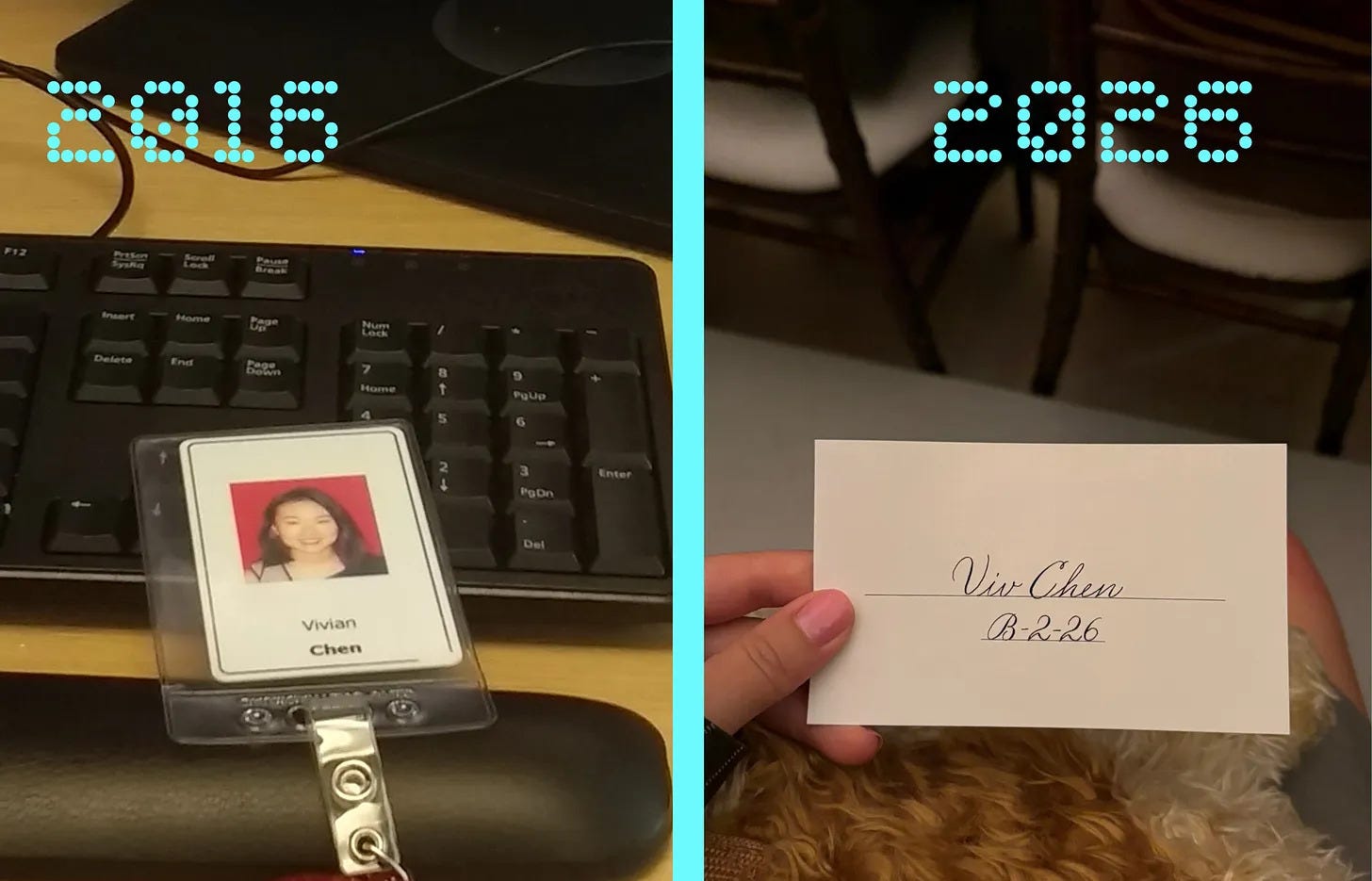
In my late 20s, I had been working a stable 9-5 job as a project manager while writing this newsletter on the side. Then, at 29, I made a risky career pivot by leaving my job to pursue full-time freelance writing. I didn’t know if it would be financially sustainable—creative fields are notoriously volatile—but I knew I wanted to try.
It wasn’t a spontaneous decision. Because I don’t believe in simply “following your passion” without a specific plan, I saved up enough money to cover two year’s worth of basic living expenses. This required a fair amount of budgeting and math. I would block off a few Saturday mornings to sit at the kitchen table with my computer, go through all my bills and average credit card monthly spend, and eventually arrived at a number I wanted to save in order to feel comfortable leaving my job. I also looked at where I could reduce expenses, so I could hit my goal savings number faster. The main categories where I cut spending were clothes and eating out at restaurants. With each paycheck, I put a chunk of money in a high-yield savings account.
I treated this career pivot as the equivalent of self-funded grad school: a stint of experimentation and learning, without a guaranteed outcome. If the whole thing was a flop after two years, I was fully prepared to go back to a standard W-2 job.
The journey has been full of surprises (both good and bad), but I’m glad I took a calculated risk. Currently, I’m earning more than I did at my 9-5 job.
Lesson #5—Prioritized long-term financial goals over lifestyle creep spending.
An overarching lesson here, which will follow me into my 30s, is to be mindful of lifestyle creep. When I’ve gotten a raise at work or landed a big contract, it’s easy to start dreaming about upgrades to my baseline lifestyle.
It can also sneak up in more subtle ways through perks and experiences, especially working within the fashion/media industry. For example, the first time I flew business class for a work trip, it was shockingly delightful. I was snug as a bug for the 6 hour flight and actually felt rested upon landing.
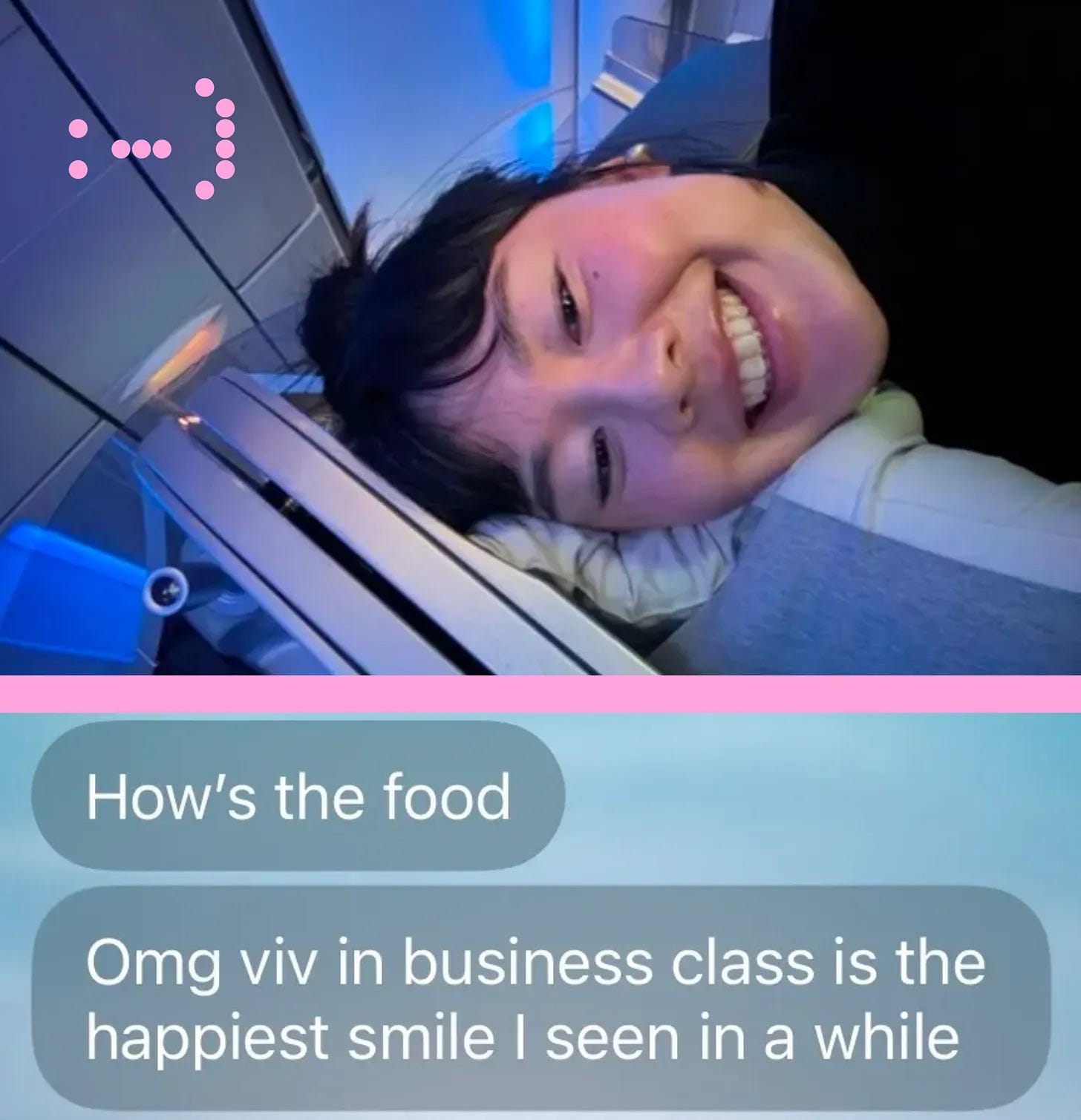
That flight was paid for by work. It wasn’t the sort of expense I’d ever incur in my everyday normal life. But, having tasted the sweet supine swaddle of a lie-flat seat, I was tempted to splurge on business class seats for personal trips…which I had to talk myself down from. Ultimately, it isn’t a necessity, and I’d rather put that money toward long-term goals.
Don’t get me wrong, I thoroughly enjoy spending on lifestyle improvements! But I try to set boundaries on expenses that would create dependence on a higher income. My 20s have made me resilient to life’s unexpected curveballs, and that’s something I’d like to hold onto forever.
JPMorgan Chase Bank, N.A. Member FDIC. ©2026 JPMorgan Chase & Co.
 | A guest post by
|