



If you’re planning a trip, then this week’s guest author is for you. Stacking paper is thrilled to partner with Henah Velez, author of Departure. Her travel articles range from fighting jet lag, the magic of traveling slow, and how she’s making it all happen financially.
While in college, my friend Stephanie and I studied abroad for a summer in Rome. After seven weeks of art history classes around the Colosseum, daily gelatos, and weekend trips to Venice and Florence, we decided to venture to London, Paris, and Barcelona before returning back to the states. As part-time work study students, we weren’t exactly flush with cash, so we did what any strapped traveler would do, and we booked our flight on an ultra-low-cost airline.
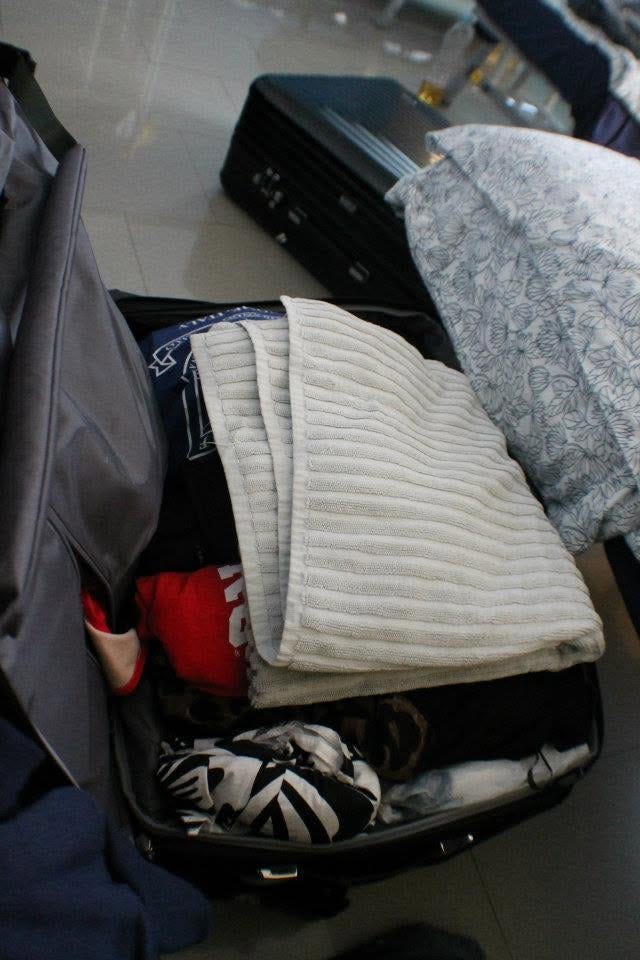
Even a decade later, I vividly remember the agent at check-in telling me I was eight kilograms over the limit, and that it would cost $123 USD. In a panic, I threw out some heavy towels and books (my version of a cardinal sin), and I managed to “only” pay $64 for the excess weight.
This was around the time “YOLO” was coined, and that was basically how I approached it…until I got home and saw my bank account. With several YOLO-style purchases that summer—when else would I be living in Italy with my friends?—I had drained my savings down to just a few hundred dollars, and rebuilding that cash cushion took nearly a year.
It was that experience that instilled the values I carry today around slow, deep travel, but it also defined how I budgeted for trips—and for the plot twist—moving forward, especially now that I travel 10+ times a year. All trips have unknowns like surprise fees, health scares, or a weather-based cancellation, and it’s better to prepare ahead of emergencies, than to panic on the outskirts of Rome.
So, here’s exactly how I approach budgeting nowadays.
1. Start a spreadsheet and consider the “hard” costs.
There are few things I love as much as starting a crisp new spreadsheet for a trip. It makes the experience feel more real, and as a Type A planner, I like being able to brain-dump my expenses in one place.
There are certain costs I know I generally can’t avoid: Transportation to a destination, accommodations once I’m there, visas or travel authorizations. Assuming I’m not using points/miles towards these expenses, I do a quick search to research estimated prices.
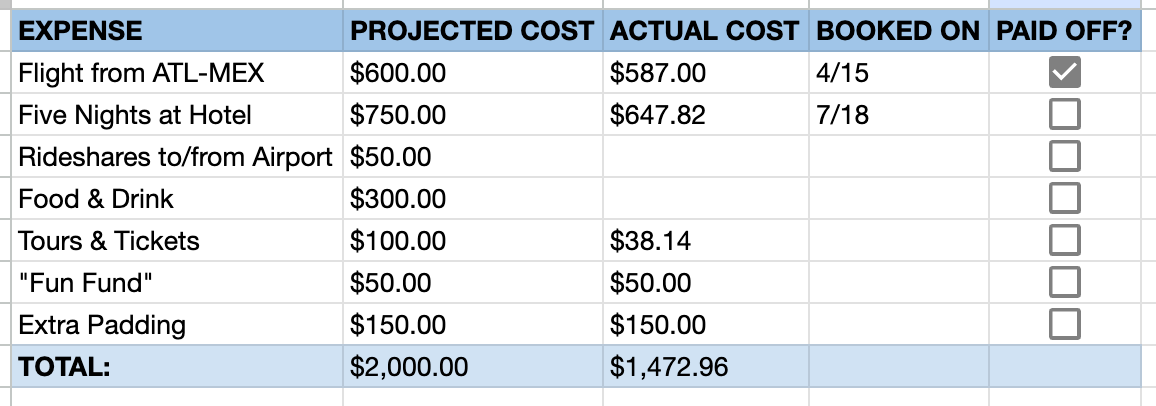
For example, if I’m planning a trip to Mexico City for Día de los Muertos with a friend next year, I’d be looking at approximately a $500 flight roundtrip, though I’d budget $600 in case of volatile pricing between now and then. Hotels around that time of year are between $200–$300/night or $1,500 for five nights, which I’d split, so I’d budget $750 at the high end for accommodations. Once you add in passport fees, visas/authorizations, transportation to/from your accommodations, rental cars, and so on, you have an overall sense of the non-negotiable hard costs.
Conversely, if you like to start with a budget first (i.e., “I want to set $2,000 aside for my big vacation next year”), you can work backwards to find transportation and accommodations accordingly.
2. Add in your “soft” costs, and set aside a “fun fund.”
I typically consider food and drink to be a “soft” cost, because I’d pay for that whether I’m at home with groceries or gallivanting across Europe. I’ll look up what the daily budget is for food—depending on if I’m going for cheap eats or fine dining—and add that in. Let’s say $300 for six days for my Mexico City example.
Add in your activities, tickets, and tours here as well. That might include a privately guided tour in English, a day trip to the historic city of Teotihuacán, or concert tickets. I try to not plan more than one event per day so I can leave room for spontaneity and exploration, but this gives a helpful guideline of what else I’ll need to budget for.
Don’t forget to think about taxes and resort fees, tips, or rentals. Try to make sure your budget is as comprehensive as possible, because it does all add up—and quickly.
Finally, give yourself the gift of flexibility, and add in what my family and I call a “fun fund.” A fun fund could be an extra $25 or $100 to use towards guilt-free purchases, like a keepsake book, artisan homewares, or a massage after a long day. This could come from regular paychecks, a side gig, or gifts.
3. Pad in an extra 10–20% & prepare for emergencies.
It’s virtually impossible to consider every single expense that might pop up on a trip. Rather than relying on payment plans or reaching your credit limit, I highly recommend:
understanding if any existing credit cards you own come with trip protection or insurance
purchasing travel insurance for emergencies, like medical evacuation or lost baggage
padding in an additional 10–20% to your overall budget as you save, so you can plan for both the trip and the plot twist
Sometimes, that plot twist can mean a cheap upgrade to a lie-flat business class seat on the way home when you unexpectedly have extra cash leftover (yay) or it could mean rushing to an urgent care after a fall (nay), both of which have happened to me while traveling! Fun!
Ultimately, knowing what you’re on the hook for will make your vacation all the more enjoyable and relaxing.
4. Figure out your savings plan.
Everyone coordinates their accounts differently, depending on their needs. Some prefer saving in a separate account for two-week stays; others lump in a weekend getaway with their monthly expenses and adjust accordingly.
What sometimes works better for me, particularly if I know I’ll need time to save up for my next trip, is a sinking fund: a designated account where I set aside regular, smaller amounts of money over time in order to pay for a specific expense. If my budget for Mexico City is $2,000 for a six-day trip, then I can spend the next five months saving $400/month, or the next ten months saving $200/month. Either way, once I start booking, I can tap that account specifically for payments and I have a long lead time to save up.
You could open a checking account or a vacation saving account; it’s up to your preference. The most important part is picking one and setting up your strategy.
As I’ve gotten older and travel more frequently, my savings plan has evolved (and I no longer fly without checking weight limits!), but my approach to budgeting remains the same: Understand my limits, prepare ahead of time, and put aside a guilt-free fund to pull from, so I can fully enjoy my trip and any last-minute expenses that pop up.


Because, well, you do only live once—and you deserve to enjoy it.