



Our next guest authors are a real 2-for-1 special: Split Zone Duo. Richard & Alex have turned their independent podcast into a 2 man championship team on Substack. Whether you’re looking for team of the week highlights, or the latest head coach hirings, SZD has got you covered.

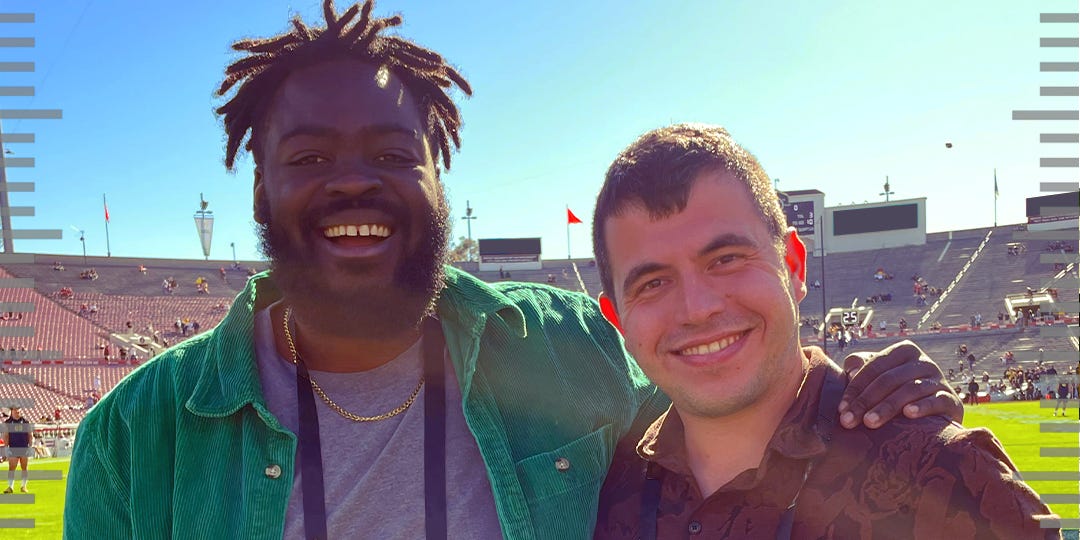
Every football fan should have at least one bucket list game weekend. Ours was Baton Rouge, Louisiana, in the fall of 2019. Richard and I made the trip early in our time working together. We spent lots of weekends watching games on our couches or in the office, and the point of this weekend was to get us back in touch with what made us fall in love with college football in the first place. It must have worked, because I still think about the trip years later. And, yes, 2019 was a special year to have a big tailgate day in Baton Rouge, but I think we would have had fun even if we hadn’t gotten to watch one of the greatest teams ever, winning in front of a sellout crowd en route to a championship.
It’s also not a cheap trip. Good experiences are worth paying for, but we’ve always found the “paying for it” part of a college football trip (or any trip) to be the least fun part of it. Your credit card statement and bank account will thank you later if you approach the weekend with a plan rather than ad-libbing it.
Five things you’re actually paying for
A trip like this will invite five main categories of expenses, and it helps to craft a budget in this order:
Getting to the area
Where you stay
Stadium-specific transport (a much different thing in most big college football towns than it would be if you were going to a pro football game in a bigger city)
Food
Tickets, which you could handle in any number of ways
What follows is how we approached our Baton Rouge trip when we were in our mid-20s, along with some tips on what we’d do differently now. Also, a key disclosure: Our work at the time paid for our flights, as we were both writing about college football. We covered the rest of our costs, as I remember it. We always feel lucky that talking about this sport counts as “work.”
Getting to the general area of the game
Say that you and three of your best football-loving buddies want to make a weekend like this happen this fall. If you follow an itinerary like ours, you’ll spend Friday night in a city an hour or two away (New Orleans, in our case) and then head to the stadium Saturday morning.
Travel costs will vary depending on timing and where you’re going. From most major U.S. airports, budget $400 or $500 for a flight to NOLA and celebrate if you have a surplus.
The move: Book your flight first, and build everything else around that. It’s very likely this will be the most expensive line item on your trip, and unlike tickets — more on them shortly — there’s not much of an argument that you’ll get a better price as the event gets closer. If you’re driving (or, even better, carpooling), congratulations: You’ve just freed up a few hundred bucks to spend on a more exciting line item.
Where you sleep (even if you won’t sleep much)
We went out in New Orleans on Friday night but stayed at a motel in Metairie, which cost something on the order of $150, split between the two of us.
That location was an intentional choice: In exchange for taking a 15-minute rideshare toward the highway, we had a cleaner getaway to Baton Rouge on Saturday morning. This was important to us. We wanted to maximize our time in the center of the action, especially because some of our good pals from the college football blogging world put on a legendary tailgate on Saturdays.
The move: Be intentional about your lodging, because you can save real money here without necessarily giving up anything important to you. College towns are not typically meant to absorb an extra 100,000 people, which means hotel rooms in places like Baton Rouge (or Athens, or Bloomington, or Tuscaloosa, or Eugene, or take your pick) are subject to enormous price spikes on game weekends. The convenience is great, but neither of us thinks back to our trip and says, “Gosh, I wish we’d spent more to stay right there.” We spent Saturday night at a different motel near the airport in Baton Rouge, took a rideshare back there after the game, and enjoyed the long, straggling nature of the trip. The motel’s free airport shuttle at 5 a.m. was another source of savings, and I needed it. Morale is never high at that hour.
Getting to the stadium and tailgate
This is where a game weekend trip becomes a “choose your own adventure” tree. Baton Rouge is not all that close to New Orleans, just as a lot of college towns are not all that close to the nearest major airport.
We took a rideshare that cost the better part of $200, as best we remember it, and ran about 90 minutes plus the slow crawl toward the stadium and tailgating fields. For us, the ride itself was about function, not fashion. But plenty of people who make the NOLA-to-BR journey on Saturdays do so in a party bus, which could easily run $2,000 for a full day. This is more commonly an option for people traveling in big groups, but it depends on your priorities.
The move: Sure, $200 for a rideshare sounds absurd until you split it four ways. When you also consider the door-to-door service that a rideshare provides and how it frees you from worrying about parking or being responsible for a car, it starts to feel like an amazing deal. The party bus option, which we didn’t do but many people enjoy, operates on similar logic: It’s ridiculous for a small group but can make a lot of sense for a big one. If you have a 20-person friend group, this cost might genuinely be worth it.
Eating
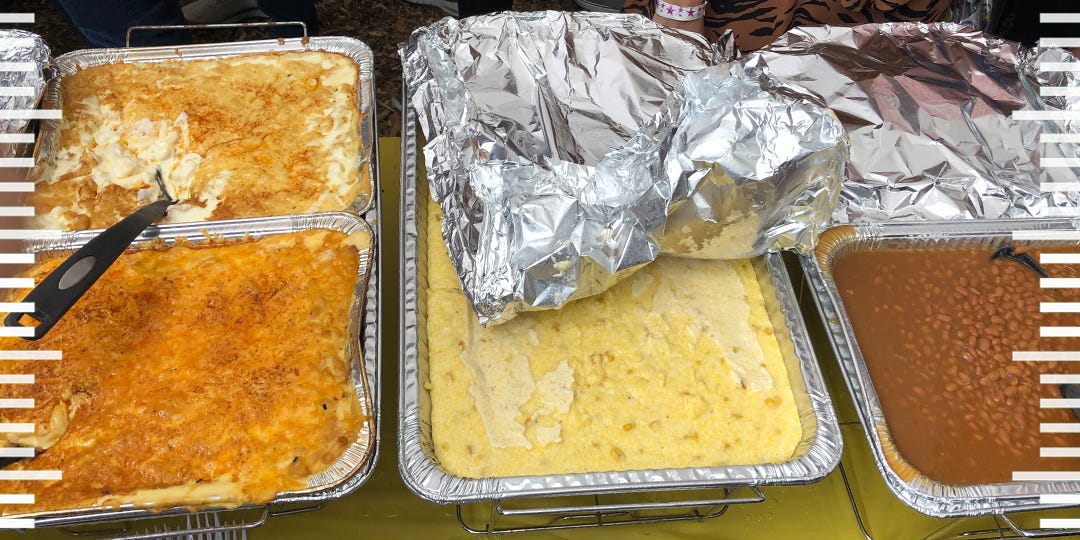
Game day expenses are variable. We gave our very nice tailgate hosts $20 each to cover our food, and we had to beg them to accept it. The people in Louisiana are really hospitable, and we could’ve easily eaten half our body weight before that night’s kickoff without spending a dollar. Gumbo and jambalaya are famous tailgating dishes here, but I’m a mac-and-cheese guy and found the most joy in that. By game time, I was not hungry, so I did not need to spend a bunch of money on concessions, which are rarely good value.
The move: Eat up before you head into the stadium. This is the easiest place to save on the whole trip. Stadium concessions cost a lot because the vendors know you are trapped inside for three hours. Meanwhile, college football tailgate food is amazing. Just about anywhere I’ve visited for a game, people in the fields or parking lots have been eager to share the fruits of their harvest with me. It’s a beautiful experience, and the best way to pay it back is by paying it forward.
Finally, the tickets
These will be the most variable cost of all, depending on which game you attend. For a middling opponent, you might spend $30 or $40 to sit in the nosebleeds, while a marquee national showcase could run several hundred bucks just for the worst seat in the house. These markets also move a lot close to game time, depending on how both teams are doing and even on the weather. You should decide when you’re planning your trip how much you care about the game itself rather than the broader experience. Our tickets were about $200 each, but I felt OK spending that because we hadn’t spent much on lodging.
The move: Patience. Things could work against you if both teams are on a heater and demand rises before kickoff. But you’ll be buying with more information if you let the game get a bit closer. You’ll also have leverage on your side if you’re buying on the secondary market (meaning from other fans or resellers, rather than the team’s ticket office). Once kickoff arrives, an unsold ticket becomes a regular piece of paper (or, these days, a QR code). Sellers don’t want to be stuck with something they tried to sell and may become more flexible around this time. You can feel out the situation for yourself, and not everyone enjoys the bartering process. (I once got into a game in Pittsburgh for about $12, a crowning achievement.) But be confident. The experience can be just as good in the nosebleeds as it is at field level.
Settling up
There’s no standalone number that accounts for the cost of this trip, and if there were, it would scale based on how many people are sharing rooms and rides. Personally, I like to be the one putting expenses on my cards and squaring up with everyone afterward, but this is a matter of personal preference.
The move: Just make your plan before Friday, because it’s no fun to spend the weekend keeping mental track of who owes what to whom. Let one or two people pay, make sure they’re keeping track, and then reimburse them promptly. There’s no need to spend the next month feeling weird about money with a group of your best friends.
The final number
Most likely, if you’re flying, it’ll run you something in the neighborhood of $700 to $1,200 to put together a Friday-to-Sunday weekend like this. But those are two very different numbers, and you might find that you have more fun on the trip if you’ve put together a plan that gets you pretty close to a specific number.
The move: Pick out the weekend in the spring, when the schedule comes out for the fall. Then settle on a number on the upper end of what you’re comfortable with, and divide that by the five or six months between then and the game. Treat the trip savings as a line item, so you’ll have a strong base to operate from as the weekend gets closer. Socking away a little each month means that by the big weekend, the costs feel a lot more manageable.
Decide the one category where you most want to splurge, do it without feeling guilty, and use your creativity and strength in numbers to fit the rest of the budget around it. If you do it that way, you’ll remember the weekend much more than you remember the budgeting.
For me, a college football bucket list item is well worth paying to check off. I’d just rather not be doing math in my head while I’m having the experience. People think the benefit of a plan is to automatically spend less money, but I’ve never thought that, especially when the payoff is a great football experience. You make a plan so that when someone hands you a plate or you notice the stadium you’re sitting inside is shaking, you’re not thinking about what you’ve spent to be there.