



If you’re planning a trip, then this week’s guest author is for you. Stacking paper is thrilled to partner with Henah Velez, author of Departure. Her travel articles range from fighting jet lag, the magic of traveling slow, and how she’s making it all happen financially.
You know the saying, “You get what you pay for?” Usually pretty spot on, but…not always the case with travel. How can you know if an experience is worth it, if you’ve never done it before?
Unless we’re billionaires with a capital B, we have limited funds we can put towards trips, and the trick isn’t to avoid wasted money as much as directing it well. Sometimes the money we did spend could’ve done more for us elsewhere on the trip.
Here’s what I mean: Maybe you saved up for a weeklong vacation, only to arrive in the midst of a weather phenomenon, unable to go outside the entire time. (This happened to me.) Maybe you went all-in with friends to a theme park, only to spend the day sunburned and dehydrated, shuffling between long lines with nowhere to sit down and cool off. (This, luckily, has not.) Or you spent $50 on a souvenir you liked at the time and then never looked at it again, when that same $50 could’ve gone towards a more comfortable seat on your flight home instead of being in the cramped middle seat.
Conversely, perhaps you skipped the fancy meal with a big group and opted for a local restaurant with a friend, and that $15 dinner made for a beautiful memory. Or you splurged on the room with the city view, and the photos you took posing in front of the skyline leave you beaming every time you see them.
So when you look back on a trip, which moments (and expenses) actually leave you with that tender, joyful feeling of time well spent?
Let’s break down the anatomy of a travel budget—where to splurge, save, and the trade-offs to consider. We’ll start with the biggest parts of our budget and work our way down to the most flexible line items. And of course, it’s worth saying explicitly: Splurging is also relative and can make all the difference. This could be simply paying the extra money for the aforementioned roomier seat, or budgeting an extra $50 for the better train time.
Finally, to be clear: This is how I approach splurging versus saving; you should run this exercise for yourself and see where your priorities are, so that, years from now, every hard-earned dollar went to a memory you’ll cherish forever.
Transportation (Planes, Trains, ‘n… Car Lanes? I’ll Workshop It)
Getting yourself from Point A to Point B is typically the largest part of the budget: Flight prices are the highest they’ve been in years, increased gas prices mean rental cars are more expensive than usual, and overnight trains usually cost a pretty penny. This doesn’t include the additional (and frankly, now standard) costs of direct flights, seat selection, or upgrades like business class or renting a minivan instead of a sedan.
🤑 SPLURGE: If an experience falls into any of the buckets below, I’m Team Splurge:
“Long haul” travel; think more than a few hours or where you might need to catch some ZZZs
You need accommodations to be comfortable, like extra leg room if you’re extremely tall, or a lie-flat seat after an injury
Departure times that allow you to maximize your day, or ones that work better for your sleep schedule (you know, going for the 11AM flight for $40 more instead of the ol’ 5AM flight to save a buck)
You have enough folks joining in to warrant a larger reservation, who can also split the costs
💰SAVE: If it doesn’t check the boxes from the above—like a quick flight from Atlanta to Miami, or a rental car for just two people for the weekend—lean towards saving and re-allocating those costs elsewhere. I asked three friends between 21–25 years old what their approaches are, and they all reiterated the same to me: They’re team carry-on like I am, and they refuse to spend more on seats when they could pocket that for later.
You could also, as I try to do, get into the #PointsGame to lower your overall costs. Chase offers a variety of travel rewards cards—ones that align with your budget and spending habits—that can also help offset these expenses.

Accommodations (Hotels vs. Hostels)
In my 20s, I spent many a night at hostels, unable to spend more on fancy accommodations and knowing I wouldn’t be spending much time there. Today, the calculus has shifted quite a bit based on my stage of life, but there’s still some math to run.
🤑 SPLURGE:
Are you traveling solo or with a friend/partner? If solo, it’s worth the extra safety and convenience of staying in a more secure location. If you’re with others, and particularly with family or children, consider exploring a larger rental so everyone has enough space and privacy. (My husband recommends making sure you have enough bathrooms and a backup plunger. Do with this information what you will.)
Do you have very limited time at a destination? Prioritize a location that’s central to where you’ll spend your time in order to cut down on the back and forth. Otherwise, a farther but cheaper space might fit the bill, literally.
Are you celebrating a milestone moment? A major birthday, anniversary, or friend’s bachelorette? Or a time of deep grief, burnout, and transformation? Move the experience on over to the splurge side.
💰SAVE: If you have flexibility, know you won’t be in the space often beyond sleeping, and don’t mind being a bit further out to live like a true local, saving might be the way to go. Here are extra tips to get the most bang for your buck:
Hostels expect an influx of travelers who don’t know each other, so they’ll set up pre-arranged social happy hours or tours. You can save by getting a solo space at a hostel if available, and then benefit from the pre-determined activities and meeting like-minded folks.
If you prefer a bit more privacy but are on a strict budget, consider booking a private room in a shared house—getting to know other travelers and hearing tips from local hosts were huge highlights when I did this throughout my 20s.
Consider vetted house-swapping or pet-sitting in exchange for accommodations. There are plenty of reputable opportunities out there via online platforms or swapping with friends of friends; just do your own due dil’, as the kids say.
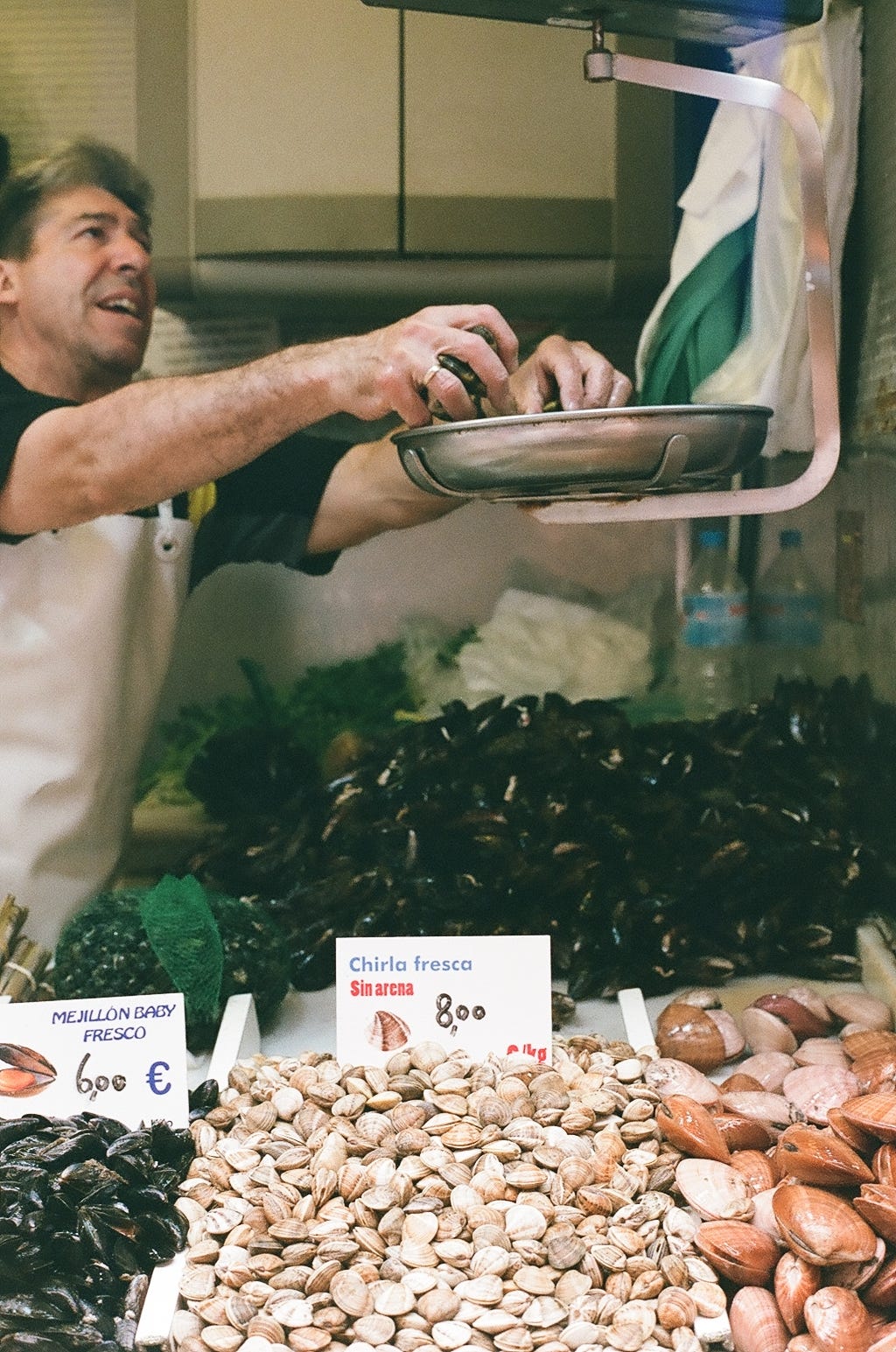
Dining, Activities, & Experiences
These are, arguably, the most arbitrary expenses to decide if you’ll splurge or save…but it’s also how most of your actual time plays out. I’m going to delineate by category, because it’s not cut and dry across the board, and I believe a balance makes for the best time.
🍝 Food & Dining: I tend to follow “Live like a local, dine once like a queen,” an arbitrary motto I just now made up. But what I mean is, I always think that investing in one “unforgettable dinner” is worth it; this could be a high-end meal, yes, but it could also equate to getting a five-course meal instead of three somewhere. The rest of the time, I try to enjoy vegetarian street foods, stop into local mom-and-pop restaurants, and do grocery runs when I’m with larger groups and we have a kitchen for breakfasts and lunches.
🚶 Activities & Tours: Most major destinations offer free walking tours with a “tip what you can” model—these are ideal for quickly understanding a place, without shelling out. And just ambling around local streets and popping into boutiques or restaurants is the “slow travel” way. But where a knowledgeable guide or curated tour might transform our experience, I’m always willing to splurge. I still think fondly of a guided tour we did in Mexico City of the local pepper market, where we made our own salsa with a chef afterwards; I couldn’t have experienced that on my own otherwise.
🚕 Local Transportation: Taking public transit in a new city is a rite of passage—it’s more cost-effective, truer to how most people in that community live, and it’s an easy way to be more sustainable on trips (after all, we all rack up carbon footprints to reach our destinations). But there are also nuances to think about, when it’s worth booking a private transfer or hailing a cab, like if you’re out late at night and far away from your hotel or if you’re dealing with health issues: Sometimes, that convenience, comfort, and safety may justify the extra transportation costs.
TL;DR: A little preparation across dining, activities, and transportation can go a long way to knowing what’s worth spending extra on—research these ahead of time and seek recs from trusted sources.

What’s Always Worth the Splurge
In this frequent traveler’s humble opinion, there are a few key purchases that are always worth booking, which I budget into every single trip:
❤️🩹 Insurance (travel, car, and/or health!): You book, pray you never need to use it, and most of the time, you don’t. But there will always be a time where you’ll need it and you’ll be glad you had it. Remember that “weather phenomenon” that derailed my entire vacation? We were stranded in one place for so long that we racked up over $1,000 in costs that travel insurance quickly reimbursed us for—we were in our early 20s at the time, and getting that $1,000 back was a huge relief. On a separate occasion, I may have slightly dinged my rental car while parking in a narrow lot—my rental car insurance from my credit card kicked in and paid the $1,200 in damages so I didn’t have to. (I promise I’m an excellent driver! It’s those darn European spots!)
😌 Comfortable Gear: This applies less to a singular trip and more to purchases you’ll use time and time again. Get the durable luggage, reputable compression socks, flexible neck pillow, an eSIM plan to roam on your phone, and both warming and cooling layers for all types of weather (or on the plane). Thank me later!
😜 The Fun Fund: In my family, we always set aside a limited amount of guilt-free money we can use on whatever we like, as a way to budget for unexpected splurges: The $40 I spent to go to a last-minute exhibition at a museum that I still think about today. An heirloom-level sweater from a small business in Oaxaca. An upgrade to a VIP ticket so we had preferred seating at a concert.
Yes, I know it’s painfully cliché, but it’s true: The moments we reminisce and reflect on aren’t always the ones with the biggest line items. But if you only have the opportunity to travel once or twice a year, every purchasing decision matters. Where you decide to save on one expense can be used towards an experience you’ll remember forever—that $100 you saved by going to a local hotel chain might go towards the best meal you’ve ever had in your life.
Because if you strike the right balance, you’ll find that every trip is worth the spend.